What makes an engineering work truly “Olympic”?

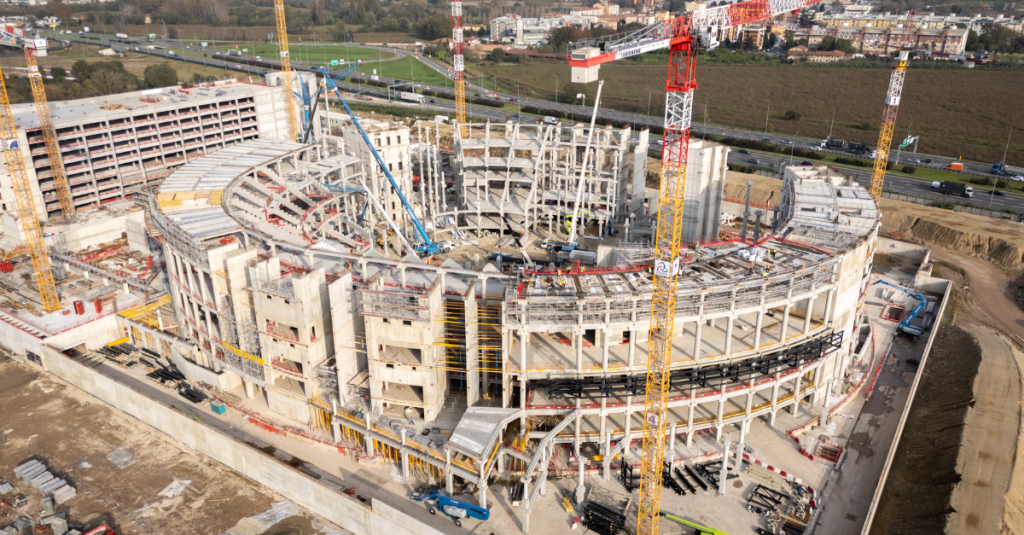
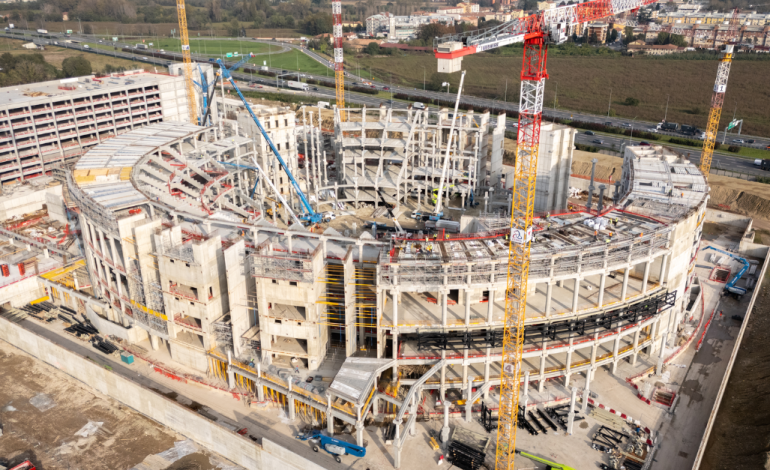
The Arena Milano Santa Giulia is one of the most important engineering works created for the Milan-Cortina 2026 Winter Olympics, designed to host ice hockey and para-hockey competitions and, subsequently, large-scale sporting and cultural events. The project represents an advanced example of integration between structural, plant and energy engineering applied to complex indoor sports infrastructures.
From a structural point of view, the building was designed to guarantee large free spaces and maximum functional flexibility. The adoption of a mixed construction system in steel and concrete made it possible to respond to the high static and dynamic stresses, while reducing construction times thanks to the use of prefabricated elements. The roof is sized to support variable loads and complex technological systems, allowing the structure to be adapted to different use configurations.
Plant engineering linked to the production and maintenance of ice assumes particular importance.
The refrigeration system has been designed to ensure uniform and stable playing conditions, integrating temperature, humidity and internal ventilation control. This required advanced coordination between disciplines and the adoption of solutions aimed at preventing condensation phenomena, while ensuring the comfort of the public.
The attention to energy efficiency translates into the use of heat recovery systems, high-performance LED lighting and provision for the integration of renewable sources, with optimized management of electrical loads during high-traffic events. At the same time, the safety design included advanced solutions for evacuation, fire prevention and flow management, sized for a high capacity of the public and compliant with international standards.
The Arena Milano Santa Giulia was ultimately conceived as a permanent infrastructure, included in a broader urban regeneration project. Its design responds to the principle of Olympic legacy, demonstrating how a work linked to a major event can become a lasting asset for the city, capable of combining engineering quality, sustainability and long-term vision.
Team IMS Editor